

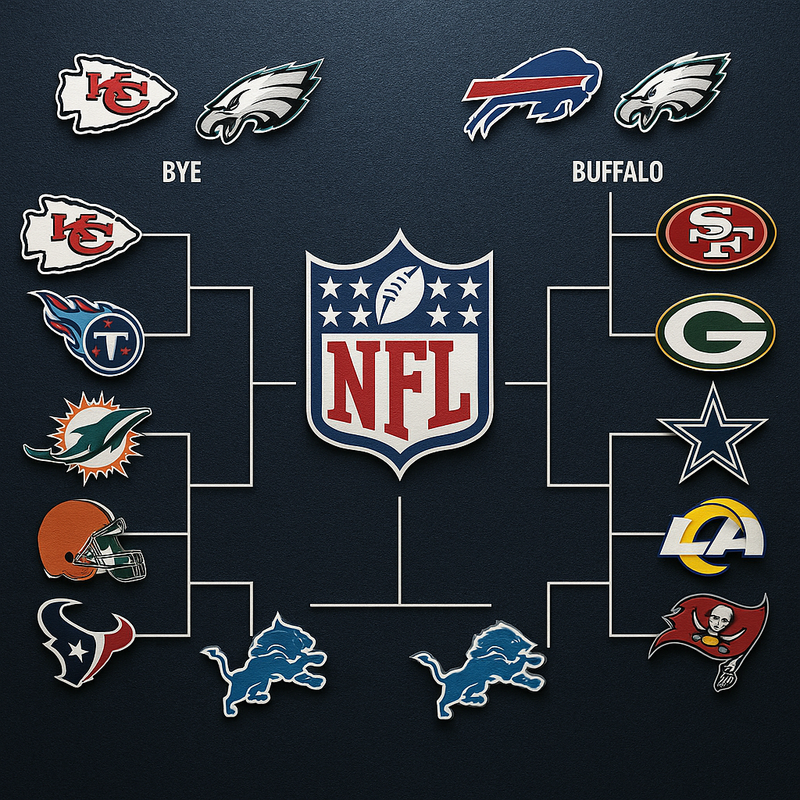
The NFL playoff bracket is structured in a way that prioritizes winning and divisional placement during the regular season. The league consists of two conferences, the American Football Conference (AFC) and the National Football Conference (NFC). Each conference has four divisions, and the team with the best record in each division is awarded a spot in the playoffs. Additionally, two or three wild card teams from each conference—those with the next best records but who did not win their division—are also invited to the playoffs. The playoffs consist of three rounds before the Super Bowl. The first round, known as the Wild Card round, involves the lowest four seeds from each conference. The winners of these games then face the higher-seeded teams who received a bye in the first round during the Divisional round. Victories here lead teams to their respective conference finals, with the winner of each going on to compete in the Super Bowl.
The system employs a single-elimination format, meaning that each game must have a winner and the loser is immediately out of the running for the Super Bowl. This makes every match critical and highly competitive. The seeding of the teams also plays a crucial role. Higher-seeded teams not only get a bye during the first round, but they also have home-field advantage, which can be a significant factor in games.
Predicting outcomes in the NFL playoffs can be complex due to the high stakes and unpredictable nature of the games. However, certain trends and data can provide some predictive insights. Typically, teams with strong defenses and the ability to control the game tempo through the run have a better chance of winning playoff games. Additionally, the health and form of key players, especially the quarterback, are crucial as the strength of this position can often decide the outcome of close games.
Turning our attention to strategies, teams often tighten their playbooks and focus on exploiting their opponents' known weaknesses while mitigating their own. Turnovers, such as interceptions and fumbles, can be particularly detrimental in the playoffs, so teams also work to minimize these mistakes. Furthermore, weather conditions can also impact games significantly, especially in outdoor stadiums during the colder months. Teams not accustomed to cold or inclement weather may struggle when playing away games in harsh conditions.

For fans, the NFL bracket not only enhances the viewing experience but also adds an element of strategy in predicting outcomes and understanding the game at a deeper level. It's a template that breaks down the journey to the Super Bowl in a clear and organized manner, adding excitement and suspense with each progressing round. It also offers a perfect framework for various fan activities, like bracket pools and playoff parties, which have become popular ways to enjoy the postseason among friends and family.
In conclusion, the NFL playoff bracket is a cornerstone of American sports culture, providing a structured yet unpredictable path to the Super Bowl. Understanding the complexities of the playoff format and the strategies employed by competing teams can significantly enhance the enjoyment of the game for fans, both casual and dedicated. As we look forward to the upcoming NFL postseason, keep an eye on how teams shape up against the competition and ready your predictions. The road to the Super Bowl is fraught with challenges and surprises, reflecting the dynamic and thrilling nature of professional football.